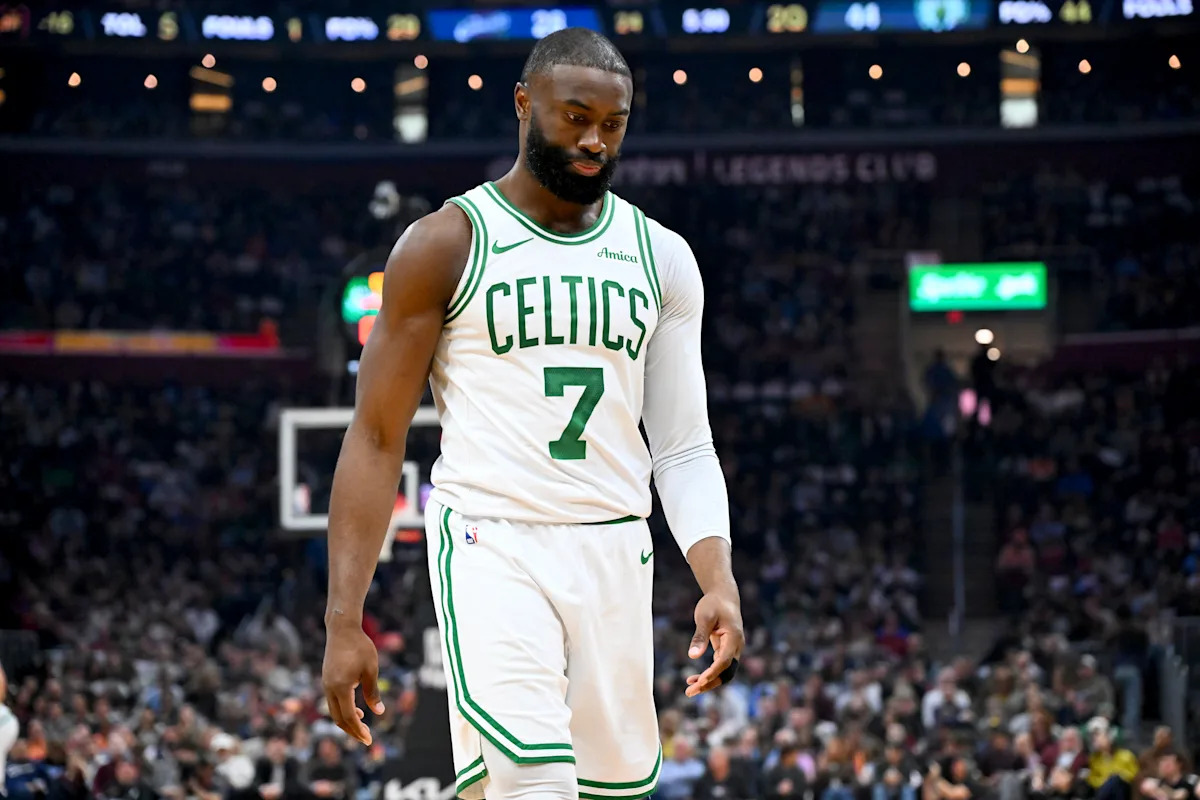
Jaylen Brown's Heated Ejection vs. Spurs: A Deep Dive into the Drama
The NBA season is a tapestry of thrilling victories, nail-biting finishes, and, occasionally, moments of intense drama that leave fans and players alike questioning the officiating. Such was the case during a high-stakes encounter that saw the Boston Celtics face off against the San Antonio Spurs. What was anticipated to be a showcase of budding talent and championship contenders quickly devolved into a fiery spectacle when Celtics All-Star Jaylen Brown was controversially ejected. This incident, unfolding in the heat of battle, sparked a significant debate about player frustration, referee conduct, and the very fabric of competitive basketball, casting a long shadow over what many had hoped would be a classic Celtics Vs Spurs Last Game.
The Ignition Point: A No-Call and Spiraling Frustration
The pivotal moment arrived with just under four minutes left in the second quarter. Jaylen Brown, dribbling near the sideline, felt contact from Spurs guard Stephon Castle, who was applying tight defense. Brown believed he was fouled, but no whistle blew. Instead, the ball was ruled out of bounds, awarding possession to the Spurs. Replays later suggested there was indeed a slight shove on Brown’s hip, adding fuel to the already burning embers of his frustration. Brown, visibly incensed, immediately voiced his displeasure. His animated protestations directed at referee Tyler Ford earned him the first technical foul for "aggressively pointing and using profanity and resentment to the no call," as detailed in a post-game pool report.
What followed was a rapid escalation. Brown continued to plead his case with another official, then turned back towards Ford within seconds. This rapid re-engagement prompted referee Suyash Mehta to issue a second technical foul, leading to Brown’s automatic ejection. The suddenness of the event shocked many, especially considering the significance of the Celtics Vs Spurs Last Game as a potential NBA Finals preview featuring stars like Jayson Tatum and Victor Wembanyama.
Mazzulla and Teammates Rally: A Unified Front
The reaction from the Boston Celtics bench was immediate and emphatic. Head coach Joe Mazzulla, usually composed, passionately defended his star player. “I understand completely where Jaylen was coming from,” Mazzulla stated, unequivocal in his support. “Absolutely. I’ve got his back, and I think he was 100 percent right to be frustrated and do what he did.” Mazzulla’s most pointed criticism, however, was directed at the way the second technical foul was issued, notably by Mehta rather than Ford, the initial referee involved in the exchange.
Mazzulla delivered a memorable analogy, stating, “Just give a ton of credit to my high school principal. He had the balls to throw a student out. He didn’t leave it to the hall monitor.” This sardonic remark underscored his belief that if an ejection was warranted, the primary official should have been the one to deliver the final blow, not a secondary official. This stance highlights a common frustration among coaches and players: the perceived inconsistency or ‘trigger-happiness’ of officials in high-pressure situations.
Brown’s teammates echoed their coach’s sentiments. Derrick White, who led the Celtics with 34 points, articulated the team’s perspective: “I think he thought he got fouled. I think he got fouled, too. He definitely earned the first (technical foul). And then I thought the second one was bulls—, honestly.” White stressed the passionate nature of the game and the unsuitability of ejecting a key player, especially one who had contributed so much all season, and particularly during a nationally televised Celtics Vs Spurs Last Game. Jayson Tatum, another integral part of the Celtics’ attack, mirrored this view, expressing disagreement with the ejection and lamenting the league's emphasis on star players being available for big games, only for officials to be "trigger happy."
The unified defense from the Celtics organization speaks volumes about the team's internal cohesion and their belief that Brown was unfairly treated. It also underscores a wider issue concerning the balance between maintaining decorum and allowing for the raw emotion that is inherent in professional sports.
Beyond the Box Score: The Deeper Implications of Officiating
Jaylen Brown’s ejection in the Celtics Vs Spurs Last Game was more than just a momentary blip; it served as a stark reminder of the ongoing tension between players and referees, especially concerning high-profile stars. This was Brown's second career ejection, hinting at a pattern of frustration that he himself alluded to on social media during the game, posting, “This the s— I be talking about,” suggesting a history of perceived unfair treatment by officials. This friction isn't unique to Brown; it's a recurring theme across the NBA, where the speed, physicality, and emotional intensity of the game often create contentious moments.
Understanding the Dynamics of Player-Referee Interactions
Several factors contribute to these heated exchanges:
- High Stakes: Every possession, every game, carries immense weight, impacting standings, playoff seeding, and player legacies. This pressure naturally amplifies reactions to perceived injustices.
- Subjectivity of Calls: While rules are clear, their application often involves subjective judgment, leading to disagreements on fouls, travels, and out-of-bounds calls.
- Player Frustration Tolerance: Elite athletes, accustomed to precision and control, can become particularly frustrated when external factors (like a missed call) disrupt their performance or the game's flow.
- Referee Authority: Officials are tasked with maintaining order and enforcing rules, and they have the power to issue technical fouls and ejections to ensure respect for the game and their authority.
The challenge lies in finding a balance. Players need to express themselves without crossing the line into abusive behavior, while referees must maintain control without appearing overly sensitive or ‘trigger-happy,’ especially in star-driven games. The NBA emphasizes a collaborative approach, encouraging communication between players and officials, but moments of high intensity can quickly unravel this delicate understanding.
Navigating the Rulebook: Ejections, Technicals, and Their Consequences
In the NBA, technical fouls are issued for a variety of infractions, ranging from unsportsmanlike conduct to excessive complaining. Two technical fouls result in an automatic ejection. The consequences extend beyond missing game time:
- Fines: Players are typically fined for technical fouls, with increasing penalties for repeated offenses throughout the season. Ejections usually incur an additional, higher fine.
- Suspensions: Accumulating a high number of technical fouls over a season can lead to automatic suspensions, impacting team performance.
- Team Impact: Losing a star player, especially mid-game, significantly hampers a team's chances of winning, as was evident in the 125-116 loss for the Celtics in the Celtics Vs Spurs Last Game. It disrupts rotations, forces tactical adjustments, and can deflate team morale.
For players, understanding these consequences is crucial. While emotions run high, learning to channel frustration constructively or addressing officials respectfully (even if disagreeing) can mitigate the risk of ejections. For officials, de-escalation tactics and understanding the context of a game – for instance, a pivotal moment in a national TV broadcast featuring star players – are paramount. The goal should always be to allow the game to be decided by the players on the court, not by an early exit due to an official's whistle.
Conclusion: A Call for Dialogue and Understanding
Jaylen Brown’s contentious ejection during the Celtics Vs Spurs Last Game was a microcosm of the larger, ongoing narrative of player-official relations in the NBA. It highlighted the raw emotions inherent in professional sports, the fine line between passionate protest and unsportsmanlike conduct, and the profound impact of officiating decisions on game outcomes. While the Celtics rallied in defense of their star, the incident also served as a valuable learning experience for all parties involved – players, coaches, and referees. Moving forward, fostering clearer communication, consistent application of rules, and a shared understanding of the game's intense emotional landscape will be vital to ensuring that the focus remains where it belongs: on the incredible athleticism and competitive spirit that defines the NBA. As the dust settles, the hope is that such incidents become catalysts for improvement, rather than recurring points of contention, allowing the league’s brightest stars to shine unhindered on the grand stage.